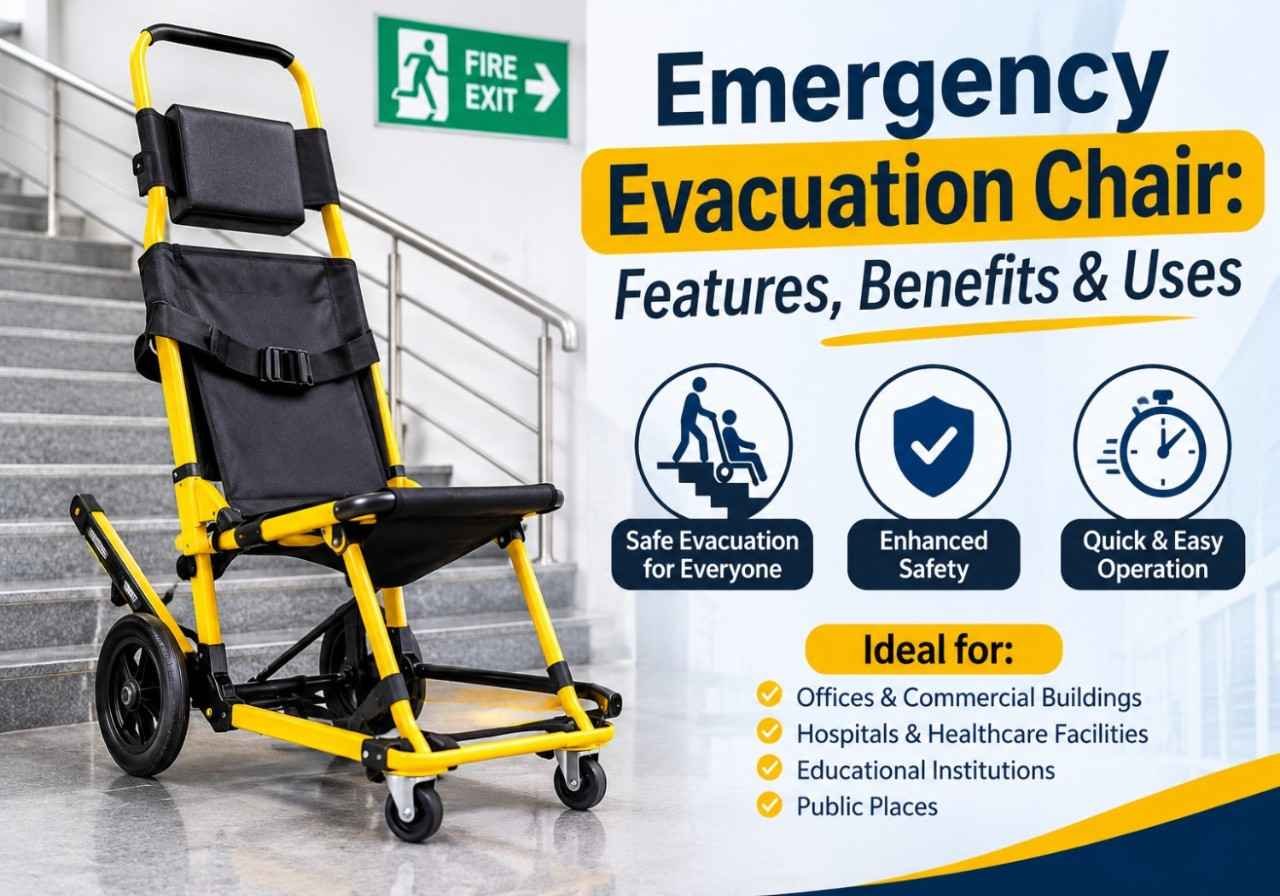
If you manage a building, care for someone with limited mobility, or simply want your family to be safer, you have probably wondered what happens to people who can’t use stairs when an emergency strikes. Lifts are not safe to use during a fire, and the stairwell becomes the only way out. That is exactly where an Emergency Evacuation Chair comes in.
It is a simple piece of equipment that most people never think about until the day they need it. In this guide, I’ll explain what these chairs are, how they work, which features really matter, and where they make the biggest difference.
What Is an Emergency Evacuation Chair?
An emergency evacuation chair is a lightweight, portable chair designed to carry a person safely down a staircase during an emergency. Think of it as a wheelchair that has learned how to handle stairs. The person sits in the chair, a trained helper guides it, and the chair glides down the steps in a controlled way instead of someone being lifted or dragged.
Most designs use a tracked system, which is basically a set of rubber belts or treads under the seat. As the chair moves down, the belts roll over each step and absorb the bumps. The operator doesn’t have to bear the person’s full weight, which is a big deal when you’re stressed, in a hurry, and maybe dealing with smoke or crowds.
These chairs aren’t meant to replace wheelchairs or everyday mobility aids. They stay folded in a corner, near a stairwell, or in a safety cabinet. Their whole purpose is to wait quietly until something goes wrong.
Why Stairs Become a Problem in an Emergency
Lifts are wonderful in daily life, but fire safety rules in most countries tell people not to use them during a fire. Power can fail, the car can stop between floors, and smoke can travel up the shaft. So the stairwell becomes the main exit route.
For someone with limited mobility, that creates a real gap in safety. Waiting for the fire brigade is sometimes the only option, and that wait can be long and frightening. Having an evacuation chair on site gives people a way to start moving right away, with a trained colleague or family member, rather than hoping help arrives in time.
That’s why many building codes and workplace safety guidelines across the world now expect a plan for people who can’t use stairs on their own. The exact rules vary from country to country, so it’s worth checking your local regulations, but the principle is the same everywhere. Everyone deserves a safe way out.
Key Features to Look For
Not every evacuation chair is built the same. When I look at any model, I focus on a handful of practical features rather than fancy marketing words.
Easy Operation
In a real emergency, nobody wants to read a manual. A good chair should open quickly, with simple latches or a single-motion setup, and feel natural to handle. If a person needs more than a minute to figure out how to use it, it isn’t doing its job.
Smooth Descent Control
The tracked belt system is the heart of the chair. It should move steadily, without sudden jolts, and let the operator control the speed. A smooth descent reduces fear for the passenger, which matters more than people realise. A calm passenger is easier to carry and much safer.
Safety Straps and Restraints
Seat belts and body straps keep the passenger secure from the moment they sit down. Look for padded, adjustable restraints that suit different body sizes. Some people may also need head or leg support, especially if they have limited muscle control.
Weight Capacity
Check the maximum load rating carefully. Different chairs support different weights, and the right choice depends on who is likely to use it. If your building serves a wide range of people, a model with a generous weight limit gives you flexibility.
Compact and Foldable Design
A chair that can’t be stored properly won’t be placed where it’s needed. Slim, foldable designs fit into stairwell corners, cupboards, or wall mounts without blocking escape routes. Lightweight frames also make it easier for one person to carry and position the chair.
Durable Materials
Look for strong aluminium or steel frames, tough fabric, and belts that won’t wear out after a few uses. Since these chairs may sit untouched for months, the materials should resist dust, humidity, and general ageing.
Brake and Stopping System
A reliable braking system lets the operator pause the descent at any point. This is useful if the stairwell is crowded or if there’s a delay ahead. It also gives everyone more confidence.
Benefits of Having an Emergency Evacuation Chair
The most obvious benefit is safety, but there’s a lot more to it than that.
It Protects Lives
This is the big one. When a person can’t use stairs, every minute counts. A chair lets trained helpers move them to safety fast, instead of waiting for professionals.
It Reduces Physical Risk for Helpers
Carrying someone down stairs by hand is dangerous for both people. Backs get injured, grips slip, and falls can happen. The chair shares the load, so one operator can handle what would normally take several strong people.
It Supports Inclusion and Equality
A building that has a plan for everyone sends a clear message. Employees, residents, and visitors with mobility challenges feel seen and valued rather than left out of the safety plan. That matters to people more than most organisations realise.
It Helps You Meet Safety Requirements
Many businesses, schools, and public buildings are expected to have a personal emergency evacuation plan for people with disabilities. An evacuation chair is a practical piece of that puzzle and often makes inspections and audits go more smoothly.
It Brings Peace of Mind
Employers, parents, caregivers, and facility managers all share the same quiet worry: “What if something happens?” Having a proper solution in place won’t make that worry vanish, but it does turn it into confidence.
Read Also: Tactile Maps: Better Accessibility for Visual Impairment
Where Are Evacuation Chairs Used?
You’ll find these chairs in more places than you might expect.
Offices and Commercial Buildings
Multi-storey offices are the classic setting. Staff and visitors with temporary or permanent mobility limits need a way down, and a chair stored on each floor or near each stairwell covers that need.
Hospitals and Care Homes
Healthcare settings often have patients who can’t walk, so evacuation chairs are especially valuable here. They’re used alongside other equipment and staff training to move people quickly when lifts can’t be used.
Schools and Universities
Students and teachers may have injuries, long-term conditions, or disabilities. Campuses with several floors benefit from having chairs in every main block, particularly in lecture halls and dormitories.
Hotels and Hospitality
Guests are unfamiliar with the building, and some may have mobility needs. A chair at the front desk or in a staff station helps hotels meet their duty of care.
Shopping Malls, Theatres, and Public Venues
Places that attract large crowds need strong emergency plans. Evacuation chairs help staff assist visitors who can’t manage stairs while the crowd is moving.
Homes and Residential Buildings
Don’t overlook private use. If someone in your family is elderly or has limited mobility and lives on an upper floor, a chair can be a smart addition to your home safety plan. The same goes for apartment blocks where residents depend on lifts.
Choosing the Right Chair for Your Needs
When you’re comparing options, look beyond the price tag. A brand like Be My Vision, which focuses on practical safety and accessibility products, is worth adding to your shortlist. Whichever supplier you consider, check the exact specifications for weight capacity, folded size, build materials, and included accessories.
Every building has different needs, and the right chair for a hospital ward may not suit a small office. It’s also smart to ask about warranty terms, spare parts availability, and training support before you buy. A chair is only as good as the service behind it.
Tips for Using an Evacuation Chair Safely
Owning the chair is only half the job. Here’s what makes the difference between having one and actually being prepared.
Train your people. Everyone who might need to operate the chair should practise with it at least once, preferably more. Real handling feels different from reading instructions.
Run drills regularly. A short practice session during a fire drill helps staff feel confident. It also shows you whether the chair is stored in the right spot.
Keep it accessible. Don’t tuck it behind boxes or lock it in a room nobody has a key to. It should be visible and quick to reach.
Inspect it often. Check belts, straps, brakes, and frames on a schedule. A quick monthly look can catch problems early.
Talk to the user. If someone in your building depends on the chair, ask them what feels comfortable and what worries them. Their input will improve your plan more than any checklist.
Make a personal evacuation plan. Decide who will help, which route they’ll take, and where the chair will be. Write it down and share it.
Common Mistakes to Avoid
A few errors come up again and again. Buying a chair and never testing it is the first one. Another is placing it on the ground floor only, when the people who need it are upstairs. Some organisations also forget to train new staff, so when the experienced operator leaves, nobody else knows what to do. And finally, many people assume one chair is enough for a whole building, when several may be needed depending on size and occupancy.
Conclusion
An Emergency Evacuation Chair is a simple tool with a very serious job. It gives people who can’t use stairs a fair chance to get out safely and gives helpers a safer way to assist them. Whether you manage an office, run a care home, look after a school, or just want to protect someone in your family, having the right equipment and the right training makes all the difference.
Compare features, think about who will use it, and plan where it will live. The best time to prepare is long before the alarm rings.
Frequently Asked Questions (FAQs)
- What is an Emergency Evacuation Chair used for?
It’s used to carry a person who can’t walk down stairs safely during an emergency such as a fire, earthquake, or building failure. A trained operator guides the chair down the steps while the passenger stays seated and strapped in.
- Who can use an Emergency Evacuation Chair?
People with permanent disabilities, temporary injuries, reduced mobility, health conditions, or age-related difficulties can use one. Pregnant women or anyone who feels unable to manage stairs in a crisis may also benefit. Always check the weight limit and suitability for each person.
- Is it difficult to operate an evacuation chair?
Most are designed to be simple, but practice is important. With a little training, one person can usually handle the chair. Regular drills make the process feel natural and much less stressful.
- Can I use an evacuation chair at home?
Yes. Many families buy them for homes with stairs, upper-floor flats, or relatives who have limited mobility. Just make sure it’s stored where it can be reached quickly and that someone knows how to use it.
- How many evacuation chairs does a building need?
It depends on the building’s size, layout, number of floors, and how many people may need assistance. A common approach is to place at least one near each stairwell or on each floor. A professional risk assessment can give you a more accurate answer.
- How often should an evacuation chair be inspected?
A visual check every month is a good habit, along with a more detailed service once a year or as the manufacturer recommends. Check the straps, brakes, belts, and frame, and replace worn parts promptly.
- What should I check before buying an evacuation chair?
Confirm the weight capacity, folded dimensions, materials, and braking system. Ask about warranty, spare parts, and training support, and buy from an official or authorised seller so you get genuine after-sales service.