A few years ago, I watched a man with a white cane reach the edge of a railway platform. There was nothing under his feet to tell him he was close. He stopped only because a stranger touched his arm. That small moment stayed with me, and it is the reason I take walkway safety seriously.
Safe walkways are not about fancy design. They are about giving every person a clear, physical signal under their feet. This is where a PU Tactile Tile with Washer comes in. If you manage a building, plan a public space, or simply want to understand what the raised dots and bars on the ground actually do, this guide is for you.
What Is a PU Tactile Tile with Washer?
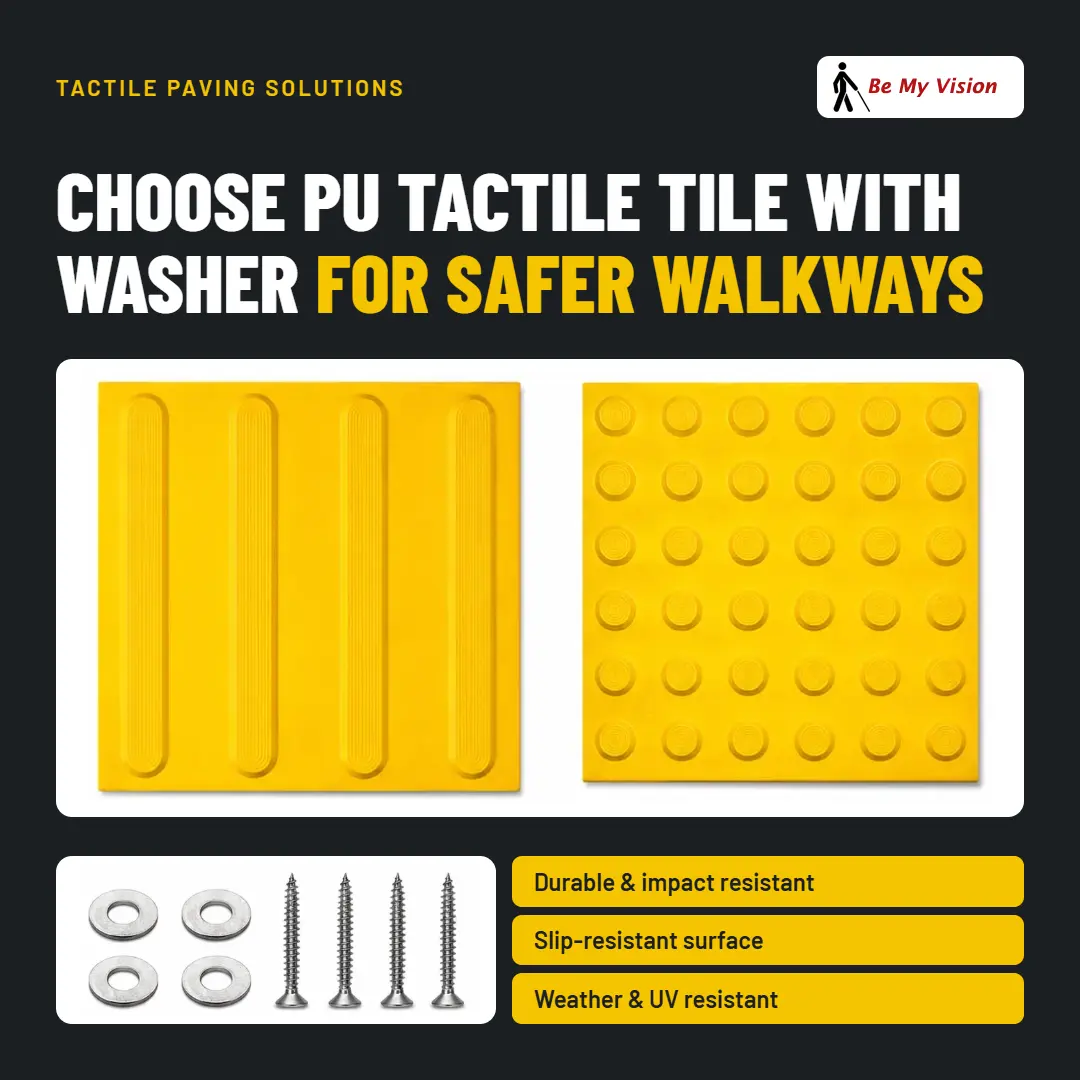
Let's start with the basics. A tactile tile is a paving unit with a raised surface pattern, usually dots or bars. People can feel those patterns through their shoes or with a cane, so the ground itself becomes a kind of message.
A PU tactile tile is made from polyurethane, a tough, flexible polymer. Unlike stone, concrete or ceramic, it does not crack easily and it does not feel cold and hard. The "washer" part refers to a small metal or stainless steel disc that sits in the tile, usually in the centre of each dot or along the fixing points. It does two jobs. It holds the tile firmly to the surface, and it adds a bit of extra grip and durability to the raised pattern.
So when someone says PU tactile tile with washer, picture a polyurethane tile, a raised warning or guiding pattern, and a secure fixing that keeps everything in place for years.
Why Tactile Paving Matters More Than You Think
Most people walk past tactile paving without noticing it. That is actually a sign it works well. But for some users, it is the difference between a confident trip and a risky one.
For People with Visual Impairments
This is the core purpose. Tactile surfaces warn people about hazards such as stairs, platform edges, pedestrian crossings and changes in level. They also guide people along a safe route through open spaces like stations, airports and plazas. A cane picks up the pattern. A foot feels it through the sole.
For Everyone Else
Here is something people often forget. Tactile paving helps others too. Parents with prams notice the change in surface and slow down. People looking at their phones get a subtle nudge. Wheelchair users, when the tiles are installed correctly, can follow a clear and predictable path. A good safety feature is quiet and useful for many people at once.
Why Choose Polyurethane Over Other Materials?
Tactile paving has been made from concrete, stainless steel, rubber, ceramic and plastic. Each has its fans. Still, polyurethane has become a popular pick for modern projects, and there are practical reasons for that.
Strong in All Kinds of Weather
PU handles heat, cold, rain and sun without turning brittle or fading quickly. Good-quality tiles include UV stabilisers, so the colour stays bright after seasons of direct sunlight. That matters, because a faded yellow tile loses its contrast, and contrast is a big part of how people with low vision spot it.
Light, Flexible and Easy to Handle
A PU tile weighs far less than a concrete paver. Workers can carry and cut it without heavy equipment. If you are retrofitting an existing corridor or sidewalk, this saves time and labour. It also means less stress on floors, which is a real concern in older buildings.
Comfortable Underfoot
Polyurethane has a little give. It feels better to walk on than steel, and it is gentler if someone stumbles. It also reduces noise, which makes it a nice choice for indoor spaces such as hospitals, malls and offices.
Resistant to Wear and Chemicals
Busy walkways take a beating. Trolleys, suitcases, cleaning machines, de-icing salts and spilled liquids all take their toll. PU resists abrasion and most common chemicals, so the pattern keeps its shape for a long time.
What Does the Washer Actually Do?
This is the question I get asked a lot. Some buyers think the washer is just decoration. It is not.
First, it improves the fixing. Tiles are often secured with screws, bolts or anchors, especially on concrete or metal surfaces. The washer spreads the load so the fixing does not pull through the polyurethane over time. Think of it like using a washer under a bolt on a wooden fence. Without it, the head can sink in or loosen.
Second, it makes the tile harder to lift or tamper with. In public areas, that is a real benefit. A loose tile is not just an eyesore. It is a trip hazard, which defeats the whole point.
Third, a stainless steel washer adds durability to high-traffic spots and gives a subtle, clean finish. Because stainless steel resists rust, it holds up outdoors and in damp environments.
If you want a tile that stays put through heavy foot traffic, the washer is a small detail that makes a big difference.
Anti-Slip Tactile Paving: What to Look For
A raised pattern is helpful, but it should never become a slip risk itself. A wet, glossy tile can be dangerous, especially on slopes, ramps and outdoor crossings. That is why Anti-Slip Tactile Paving is not a luxury. It is a basic requirement.
When comparing products, keep these points in mind.
Surface Texture and Slip Resistance
Check whether the tile has a tested slip resistance rating. Many manufacturers publish pendulum test values or other slip results. A textured top surface, with a fine grit finish on the dots and the flat areas, helps your shoes grip even when it is raining. Ask for the data. A trustworthy supplier will not hesitate.
Pattern Type
There are two main patterns, and using the right one in the right place is important.
- Blister or dot pattern: This is a warning surface. It tells people to stop and be careful. You will see it at crossings, platform edges and the top and bottom of staircases.
- Bar or lozenge pattern: This is a guiding surface. It shows a direction of travel and leads people along a safe path.
Mixing them up confuses users, so follow your local guidance carefully.
Colour Contrast
The tile should stand out from the floor around it. Yellow is the most common choice because it is easy to see, but other colours work if the contrast is strong. A light tile on a dark floor, or the other way round, usually does the trick. Grey on grey does not.
Size and Thickness
Tiles come in different sizes, and thickness also varies. Thinner tiles suit indoor retrofits where you do not want to create a lip. Thicker ones are better for outdoor and heavy-traffic zones. Make sure the edges are chamfered or bevelled so they do not catch wheels or toes.
Standards and Compliance
Regulations differ from one country to another. Some regions follow ISO guidance, while others have their own national rules about dot height, spacing and placement. Before you buy, check what applies in your area. A tile that is perfect on paper but does not meet local rules can cause expensive rework later.
Where Can You Use PU Tactile Tiles?
These tiles are versatile. Some of the most common places include:
- Train, metro and bus stations
- Airports and ferry terminals
- Pedestrian crossings and kerb ramps
- Shopping centres and hotels
- Hospitals, clinics and care homes
- Schools and universities
- Parks, plazas and walkways
- Office lobbies and corridors
Indoors, they bring a clean, modern look. Outdoors, they handle the weather without fuss. That flexibility is one reason many contractors like them.
A Few Installation Tips from Experience
Even the best tile will disappoint if it is installed badly. Here are a few things that save trouble.
Start with a clean, flat surface. Dust, oil and uneven spots weaken the bond. Take a few extra minutes to prepare the base, and you will thank yourself later.
Plan the layout first. Dry-lay the tiles before fixing anything. Check that the route makes sense, that the width is enough, and that the pattern lines up properly at corners and turns.
Use the right fixing method. Depending on the surface, you may need adhesive, screws with washers, or both. Follow the manufacturer's instructions. Do not guess on this part.
Mind the edges. Tiles should sit flush with the surrounding surface or have a gentle transition. A small lip may look harmless, but it can catch a cane tip or a wheel.
Let adhesive cure properly. It is tempting to open the walkway early, especially on a busy site. Resist that. A rushed job often means tiles lifting within weeks.
Keeping Them in Good Shape
The good news is that maintenance is simple. Sweep away dirt regularly, and wash with mild soap and water now and then. Avoid harsh solvents, which can dull the surface. Check the tiles every few months for loose edges or damaged fixings, especially in high-traffic areas. If a tile is cracked or lifting, replace it quickly. One bad tile can undo the benefit of a whole line.
Also keep the surface clear. Bins, signboards, bicycles and market stalls placed on tactile paving defeat its purpose. It sounds obvious, but it happens all the time.
Mistakes to Avoid When Buying
Over the years, I have seen the same errors come up again and again.
- Choosing only on price, then paying more for replacements
- Ignoring slip test data
- Picking a colour with weak contrast
- Using dot and bar patterns in the wrong places
- Skipping the supplier's installation guide
- Forgetting that outdoor tiles need UV protection
A little research up front prevents most of these problems.
Conclusion
Safe walkways rarely get praise, because when they work, nobody notices. But for people who rely on touch to move through the world, a good tactile surface is a quiet kind of freedom.
A PU Tactile Tile with Washer gives you a practical mix of strength, comfort and secure fixing. When you pair it with proper Anti-Slip Tactile Paving features, such as a grippy finish, strong colour contrast and the right pattern, you create a space that is safer for everyone, not just for those who need it most.
Take your time, check local standards, ask suppliers for test results and install carefully. The effort is small. The impact lasts for years.
Frequently Asked Questions
- What is a PU tactile tile with washer used for?
It is used to create warning and guiding surfaces on walkways. The raised pattern helps people with visual impairments detect hazards and follow safe routes, while the washer keeps the tile securely fixed.
- Is polyurethane better than concrete or stainless steel for tactile paving?
It depends on the project. PU is lighter, quieter and easier to install, and it resists weather and wear well. Concrete suits heavy civil works, and stainless steel is very durable but can feel cold and slippery when wet. For many indoor and mixed-use areas, PU is a very practical choice.
- Can PU tactile tiles be used outdoors?
Yes, as long as they are UV-stabilised and have an anti-slip surface. Good-quality tiles handle rain, sun and temperature changes without cracking or fading quickly.
- Why does a tactile tile need a washer?
The washer spreads the pressure from the screw or bolt, stops the fixing from pulling through the tile and makes the tile harder to loosen. This keeps it stable under heavy foot traffic.
- How do I know if anti-slip tactile paving is really slip-resistant?
Ask for slip test results, such as pendulum or friction ratings, and look at the surface texture. A fine grit finish on both the dots and the flat areas usually gives better grip in wet conditions.
- What colour should I choose for tactile tiles?
Choose a colour that contrasts strongly with the surrounding floor. Yellow is the most popular, but black, grey or other colours work when they stand out clearly from the background.
- How long do PU tactile tiles last?
With decent quality and proper installation, they can last many years, even in busy locations. Regular cleaning and quick replacement of damaged tiles will extend their life further.
- Do tactile paving standards differ between countries?
Yes. Dot height, spacing, colour and placement rules vary by region. Always check your local accessibility regulations before ordering, so the installation meets legal and safety requirements.